
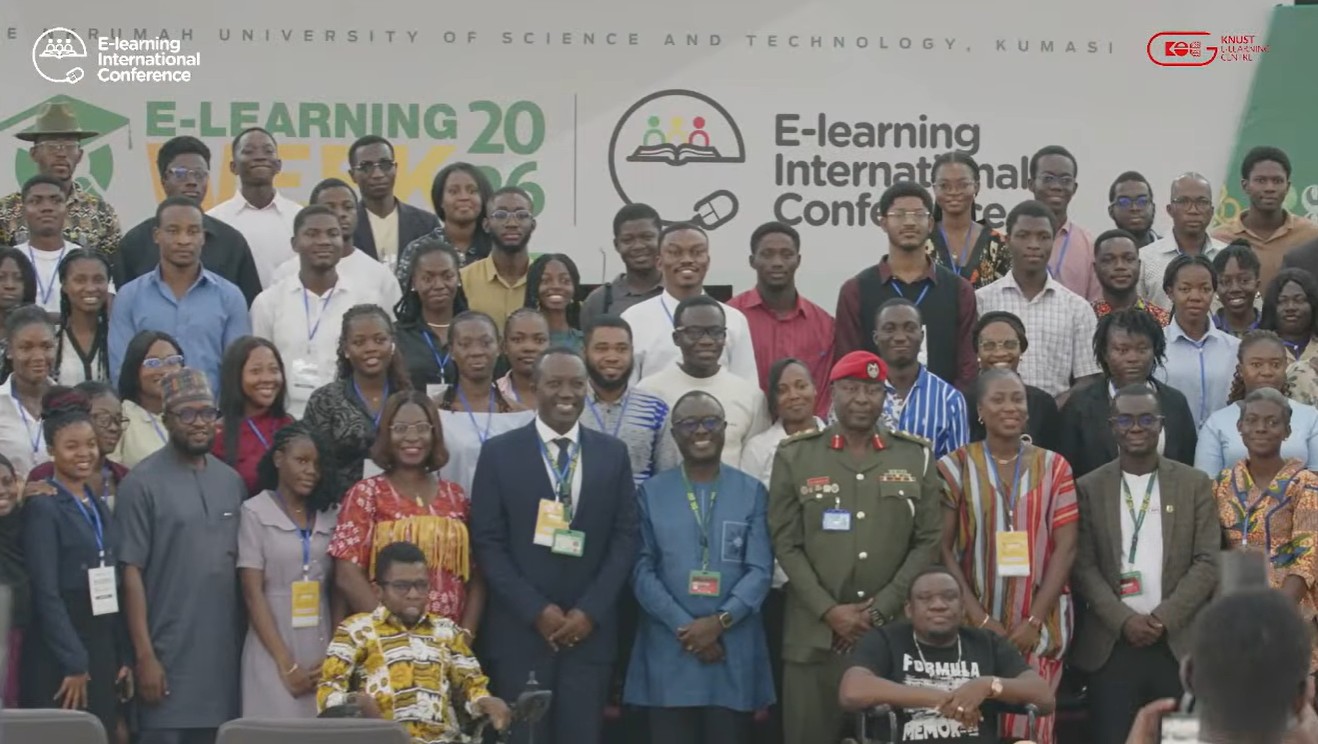
The Kwame Nkrumah University of Science and Technology, Kumasi (KNUST), has concluded its 2026 E-Learning Awareness Week and International Conference (ELIC 2026), reaffirming its commitment to building inclusive, ethical and equitable digital learning ecosystems powered by artificial intelligence (AI).
The week-long programme culminated in a special address by the Deputy Commandant of the Kofi Annan International Peacekeeping Training Centre (KAIPTC), Brigadier General Zibrim Bawah Ayerrogo, who challenged universities, governments and technology developers to ensure that AI serves humanity rather than replacing it.
Speaking on the theme, "The Future We Choose: Artificial Intelligence, Human Values, and the Next Generation of E-Learning Ecosystems," Brig. Gen. Ayerrogo said the future of education would not be determined solely by technological advancement but by the values, policies and leadership guiding its application.
He said that while AI offers significant opportunities to personalise learning, improve administrative efficiency, support early intervention for struggling students and expand access to education, its deployment must be guided by fairness, inclusivity and accountability.
"The future we choose will not be defined by technology alone. It will be determined by the policies we adopt, the problems we choose to solve and the values we embed into the systems we design," he said.
He also cautioned against the risks associated with AI, including algorithmic bias, unequal access to digital technologies, data privacy concerns and Africa's dependence on technologies developed elsewhere. He urged African universities to move beyond being consumers of technology to becoming creators of solutions that reflect the continent's cultural, linguistic and developmental realities. He also called for stronger collaboration among academia, governments, industry and civil society to build digital learning ecosystems that leave no learner behind.
Delivering the Vice-Chancellor's closing remarks, the Pro Vice-Chancellor, Professor David Asamoah, said the conference had reaffirmed KNUST's sustained investment in digital education since the COVID-19 pandemic. He noted that the week's activities showcased the University's progress through capacity-building programmes, infrastructure development, policy dialogue and cutting-edge research.
He reiterated KNUST's leadership in Ghana's digital transformation agenda, noting that the University was the first in the country to introduce a compulsory AI course for all undergraduate and postgraduate students. He added that KNUST had contributed to the development of the National AI Policy and is an active partner in the One Million Coders Programme.
Describing ELIC 2026 as an important platform for advancing scholarship on AI governance, digital ethics, learning analytics and technology-enhanced education across Africa, Prof. Asamoah urged participants to translate the knowledge and partnerships established during the conference into lasting impact.
"The conversations started here, the commitments made here and the partnerships deepened here are the real outputs of ELIC 2026. Carry them back, act on them and return next year ready to report what you built with them," he said.
He commended the Director of the KNUST E-Learning Centre, Professor Emmanuel Kofi Akowuah, the Chairman of the Organising Committee, Professor Daniel Addai Duah, and members of the organising committee for successfully delivering the week-long programme, describing the conference as a reflection of KNUST's vision and commitment to digital transformation.
A major highlight of the closing ceremony was the presentation of the 2026 KNUST E-Learning Excellence Awards, recognising individuals and colleges whose contributions have advanced digital teaching, learning and innovation across the University.
The Vice-Chancellor, Professor (Mrs.) Rita Akosua Dickson, received the Ultimate Award for E-Learning Leadership in recognition of her leadership in championing digital transformation and spearheading the establishment of the KNUST E-Learning Centre.
Professor Eric Appau Asante, the Centre's founding Director, received the Founding Director's Award, while Mr. Christopher Addo was honoured with the Founding Registrar's Award for his role in laying the administrative foundation of the Centre. Mr. Courage Julius Logah, Principal Investigator of the Mastercard Foundation E-Learning Initiative at KNUST, received the Architect of Digital Learning Award for his contributions to digital learning infrastructure, student support and staff capacity development.
Awards were also presented to the colleges for excellence in AI-enabled learning (College of Engineering), digital feedback and assessment (College of Humanities and Social Sciences), content creation and learning activities (College of Science), community e-learning impact (College of Agriculture and Natural Resources), and e-learning scholarship (College of Art and Built Environment). Outstanding faculty and staff members from the various colleges also received E-Learning Champion Awards for advancing digital education within their respective academic units.
Story: Abigail Ofori


